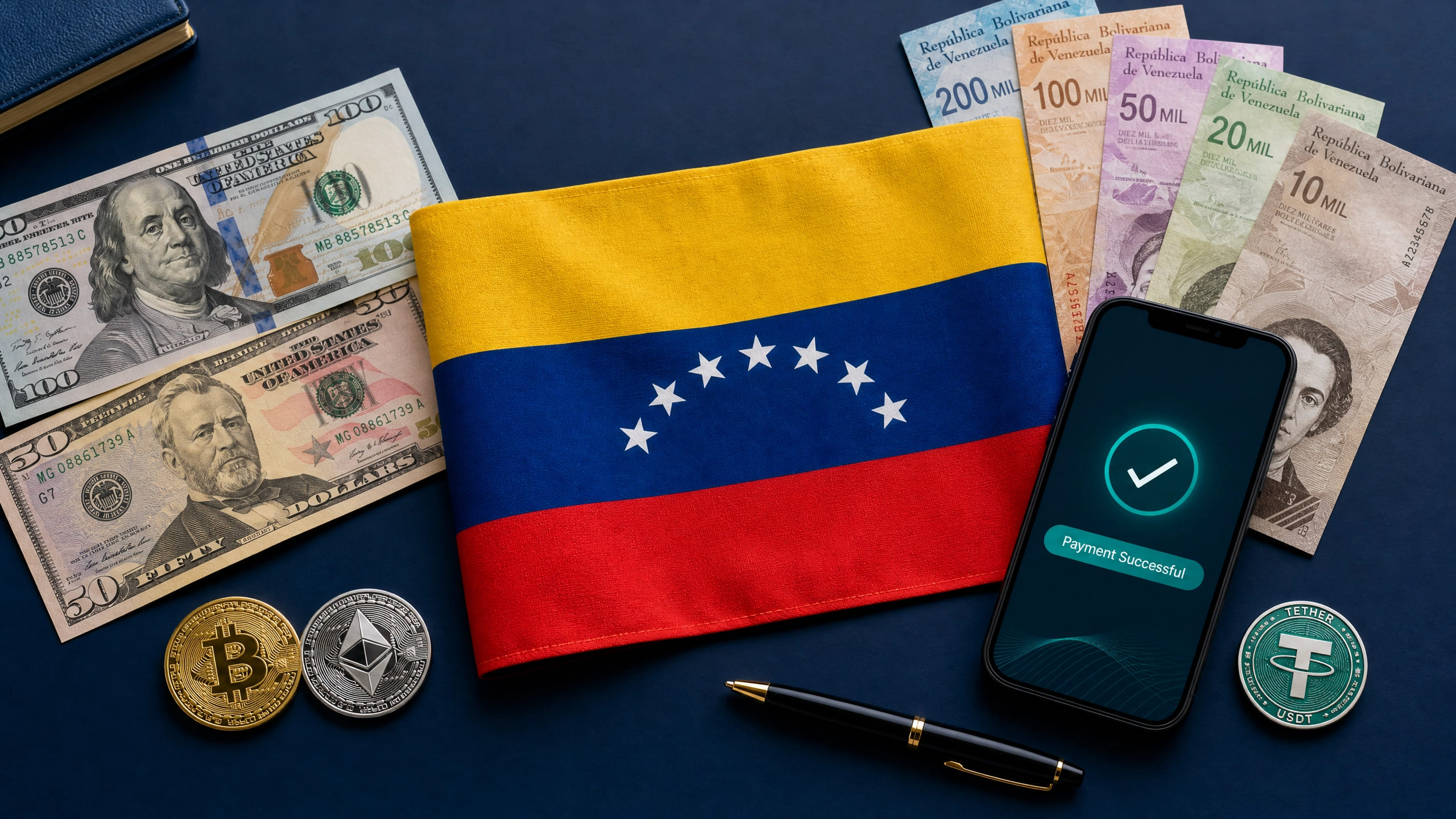
Where to Exchange Venezuelan Currency for USD
Need to exchange bolivares for US dollars? Compare official rates, licensed exchange houses, digital platforms, and the risks of informal trading.
Exchanging bolivares for US dollars, or the reverse, comes with an extra layer most currency exchanges do not have: two different exchange rates operating at the same time. Knowing where each rate applies, and where you can actually go to exchange money safely, makes a real difference in how much value you keep.
Official vs. Parallel Exchange Rates
The official rate is published daily by the Banco Central de Venezuela (BCV) and applies to transactions processed through authorized banks and financial institutions. It is generally the lower of the two rates.
The parallel rate, sometimes called the “black market” or “paralelo” rate, reflects what people and businesses actually pay for dollars outside the official system. It floats freely based on supply and demand and, as of mid 2026, has consistently traded above the official rate, at times by a wide margin.
For most day to day purchases and informal exchanges within Venezuela, the parallel rate is the more realistic reference point. For formal banking transactions, taxes, and some payroll calculations, the official rate is what applies legally.
Banks and Licensed Exchange Houses
Licensed banks and registered “casas de cambio” (exchange houses) offer the most regulated way to convert currency, applying the official BCV rate. This route is the most transparent and traceable, which matters for businesses that need documentation for accounting or tax purposes, but it will generally get you fewer bolivares per dollar than the parallel market.
Digital Platforms for Currency Exchange
Digital wallets and platforms like Airtm, Binance, and Reserve have become a mainstream way to hold and convert value between bolivares, US dollars, and stablecoins like USDT and USDC. These platforms typically reference rates closer to the parallel market and allow near instant conversion, though the funds still need a final step, a bank transfer, a cash pickup, or a peer to peer trade, to become spendable local currency or cash in hand.
Risks of Informal Exchange
Trading cash dollars for bolivares directly with an individual or an unlicensed street exchanger carries real risk: counterfeit bills, being shortchanged on the count, or simply having no recourse if something goes wrong. It is also, depending on the specific transaction and amount, an area where Venezuela’s currency control regulations can create legal exposure for both parties.
For businesses in particular, using unlicensed exchange channels for anything beyond very small personal amounts is not a sound practice, since it complicates accounting and can create compliance issues down the line.
Tips to Get the Best Rate
Check both the official BCV rate and a reputable parallel rate tracker on the same day before exchanging, since the gap between them changes constantly and affects how much value you get from either channel.
Favor licensed exchange houses or well established digital platforms over informal individual traders, even if the rate looks marginally better elsewhere, since the safety and traceability are usually worth the small difference.
If you are exchanging for a business purpose, keep documentation of the transaction and the rate applied, since this will matter for your accounting and, potentially, for payroll compliance if wages are partly indexed to the dollar.
FAQs
What is the difference between the official and parallel rate? The official rate is set daily by the BCV for regulated transactions; the parallel rate reflects free market supply and demand and is usually higher.
Is it legal to exchange currency on the parallel market? The legal landscape has evolved and enforcement has varied over time, so using licensed exchange houses or established digital platforms is the safer approach for both individuals and businesses.
Where can I check the current exchange rate? The BCV publishes the official rate on its own site, and several independent monitors track the parallel rate in near real time.
For a related question many people ask alongside this one, see our guide on where to buy Venezuelan bolivares outside the country.

Ready to Build Your Team in Venezuela?
Tell us what you need and one of our advisors will reach out within 24 hours.
All fields are required.