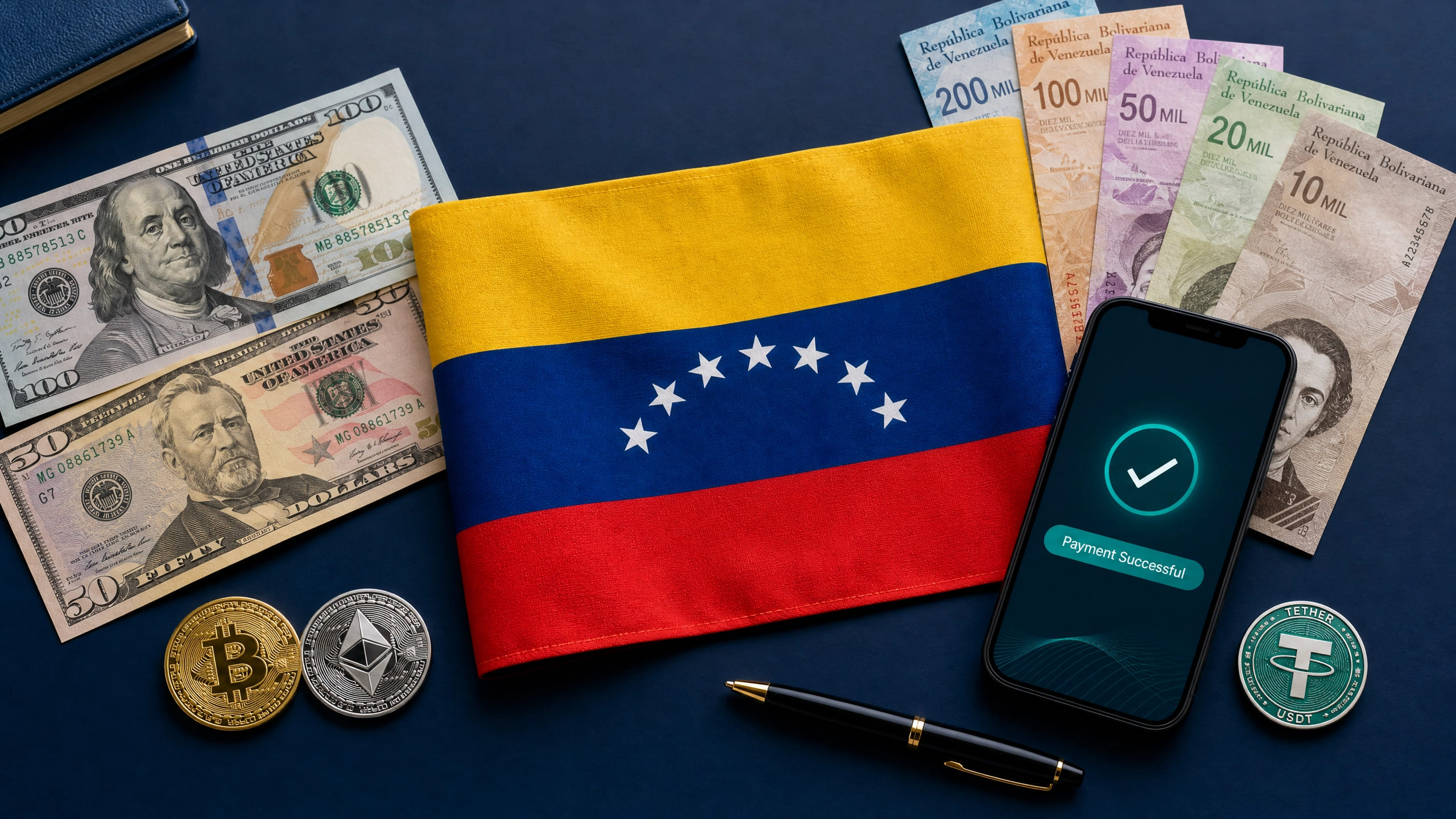
What Is the Currency of Venezuela Called?
Venezuela's official currency is the bolivar. Here's its history of redenominations, how it's used today, and why the name keeps changing.
If you have looked into paying employees, sending remittances, or doing business in Venezuela, you may have noticed the currency gets referred to by a few different names: bolivar, bolivar soberano, bolivar digital. That is not a translation issue. It reflects a currency that has been redenominated multiple times in the last two decades to cope with hyperinflation.
The Official Currency: The Bolivar
Venezuela’s official currency is the bolivar, with the ISO code VES and the symbol Bs. It is named after Simón Bolívar, the independence leader, and has been the country’s currency since it replaced the Venezuelan peso in 1879.
A Brief History of Currency Changes
The version of the bolivar you will encounter in 2026 is the result of three separate redenominations, each one stripping zeros off the currency to make it usable again after periods of extreme inflation.
In 2008, the government introduced the “bolivar fuerte” (strong bolivar), removing three zeros from the original bolivar.
In 2018, facing runaway hyperinflation, it introduced the “bolivar soberano” (sovereign bolivar), removing five more zeros.
In October 2021, it redenominated again, removing six additional zeros to create what is simply called the bolivar today, sometimes referred to informally as the “bolivar digital” because of the note series introduced alongside it. To put the scale of these changes in perspective, one bolivar today is equivalent to 100 trillion of the original bolivares from before 2008.
In practice, most people and businesses today just say “bolivar,” without the qualifiers, since the earlier versions are no longer in circulation for daily transactions.
Bolivar vs. US Dollar in Daily Transactions
Even though the bolivar is the only legal tender, informal dollarization is widespread. Many prices, especially for rent, imported goods, and larger purchases, are quoted and paid in US dollars, cash or digital, while smaller daily transactions and salaries are still typically denominated in bolivares.
This dual currency reality means a business operating in Venezuela, whether local or foreign, usually needs to think in both currencies at once: paying suppliers or partial salaries in dollars where common, while still complying with bolivar denominated obligations like taxes and social security contributions.
How Exchange Rates Are Set
The Banco Central de Venezuela (BCV) publishes an official exchange rate daily, calculated from an average of authorized foreign exchange transactions. As of mid 2026, that official rate has been running in the hundreds of bolivares per dollar and moving frequently.
Alongside it, a parallel, unregulated market rate reflects actual supply and demand for dollars outside the official system, and it typically trades at a noticeably higher rate than the BCV’s published figure. Most consumer prices and informal transactions reference the parallel rate more closely than the official one.
FAQs
Is the US dollar legal tender in Venezuela? No. The bolivar is the only official legal tender, though dollars are widely accepted and used informally, especially in cities.
Why has the bolivar changed names so many times? Each name change corresponds to a redenomination, where the government removes zeros from the currency to simplify transactions after a period of severe inflation.
What is the current official exchange rate? It changes daily and is published by the BCV. For payroll or business purposes, always check the current rate rather than relying on a fixed figure, since it moves frequently.
For more on how that official versus parallel rate gap affects real transactions, see our guide on where to exchange Venezuelan currency for USD.

Ready to Build Your Team in Venezuela?
Tell us what you need and one of our advisors will reach out within 24 hours.
All fields are required.