Does Venezuela Use the US Dollar? What to Know
The US dollar isn't official in Venezuela, but it's used everywhere. Here's how the bolivar-dollar dual economy works and what it means for business.
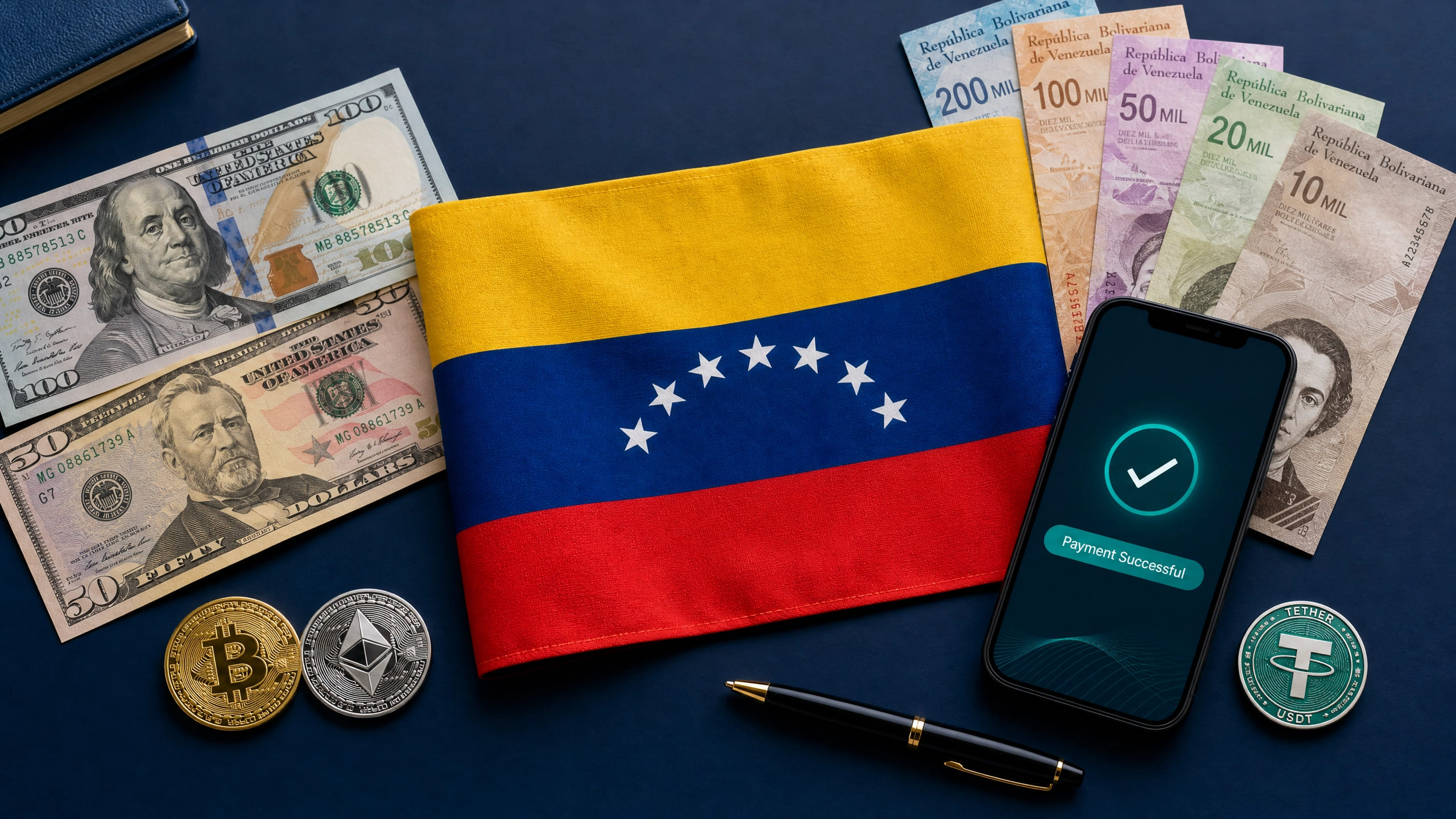
Walk into a store in Caracas and you might see a price tag in bolivares, in dollars, or in both at once. The US dollar is not Venezuela’s official currency, but it plays such a large role in the day to day economy that many people assume it is. Here is how that dual currency reality actually works.
The Bolivar Dollar Dual Economy
Venezuela’s only legal tender is the bolivar. There is no law making the US dollar official currency. What has happened instead is informal, or de facto, dollarization: a large share of everyday transactions, especially in cities, are priced and paid in US dollars simply because businesses and consumers have chosen to use them as a more stable store of value than the bolivar, which has lost purchasing power rapidly through repeated hyperinflationary episodes.
The result is a genuinely dual currency economy, where a single business might price rent in dollars, pay part of an employee’s compensation in dollars, and still process daily bolivar transactions for smaller purchases, taxes, and government fees.
Where Dollars Are Accepted
Dollars are widely accepted in supermarkets, restaurants, pharmacies, and retail chains in larger cities, and increasingly common even in smaller towns. Real estate transactions, higher value purchases, and many professional services are frequently quoted directly in dollars.
That said, acceptance is not universal or guaranteed by law. A business can choose to accept only bolivares, and government offices, taxes, and many official fees must still be paid in bolivares at the official exchange rate.
Why De Facto Dollarization Happened
Venezuela went through a period of extreme hyperinflation, with inflation exceeding a million percent at its peak in 2018, and it has continued to run at very high rates since, with 2026 projections still in the hundreds of percent. In that environment, the bolivar loses value so quickly that holding savings, quoting prices, or paying salaries entirely in bolivares becomes impractical. Businesses and households turned to the US dollar as a more predictable unit of value, and that behavior became self reinforcing over time.
What It Means for Payroll and Pricing
For a business operating in Venezuela, this dual currency reality is not optional to plan around. Many companies structure part of compensation in dollars, whether as a fixed monthly amount or as a bonus indexed to the exchange rate, specifically to protect employees’ real income from bolivar depreciation. At the same time, mandatory contributions, taxes, and several statutory benefits are still calculated and paid in bolivares, which means payroll systems generally need to handle both currencies accurately and convert at the correct, current exchange rate on each pay date.
Getting this wrong, using a stale exchange rate or the wrong rate source, is one of the more common payroll errors employers make when paying Venezuelan staff.
FAQs
Is the US dollar legal tender in Venezuela? No, only the bolivar is legal tender, though dollars are widely used and accepted informally.
Can employers legally pay salaries in US dollars? Employers can offer dollar denominated bonuses or portions of compensation, but statutory obligations tied to the legal minimum wage and mandatory benefits are calculated in bolivares.
Why do some businesses only accept bolivares? It depends on the business and, in some cases, on government or sector specific rules that require bolivar pricing for certain goods and services.
For a deeper look at how this affects compensation structures, see our comparison of USD versus bolivar pay in Venezuela.

Ready to Build Your Team in Venezuela?
Tell us what you need and one of our advisors will reach out within 24 hours.
All fields are required.